
Ultimate Bamboo Bonsai Plant Care Guide
Have you ever been captivated by the delicate beauty of a bamboo bonsai plant? I know I have. The elegant and tranquil presence they bring to any space is truly something remarkable. But as with any living thing, these miniature wonders require care and attention to thrive and flourish.
If you’re anything like me, you want to ensure that your bamboo bonsai plant receives the best possible care. You want it to grow vigorously, exuding vitality and radiating its unique charm. That’s why we’ve created this comprehensive bamboo bonsai care guide. We want to equip you with the knowledge and techniques needed to nurture your plant and unlock its full potential.
Throughout this guide, we’ll explore the essential aspects of bamboo bonsai care, from placement and watering to pruning and repotting. We’ll demystify the process of caring for these exquisite plants, empowering you to create an enchanting bonsai display that will inspire awe in all who behold it. So, are you ready to embark on this exciting journey?
Key Takeaways:
- Outdoor placement with ample sunlight is crucial for bamboo bonsai plants.
- Maintain consistent moisture by keeping the soil moist at all times.
- Bamboo bonsai plants benefit from mild and balanced fertilizers during the growth season.
- Regular pruning is essential to maintain shape and size.
- Repotting may be necessary annually to accommodate the fast-growing roots.
Placement
When it comes to the placement of bamboo bonsai plants, outdoor is the way to go. These resilient plants thrive in sunlight, and the more light they receive, the denser their growth becomes. To ensure optimal growth and health, it is essential to find the ideal spot in your outdoor space.
The ideal placement for bamboo bonsai plants is in a spot that receives bright sunlight throughout the day. However, it is also important to provide some shade from surrounding plants to prevent excessive heat and potential sunburn.
By placing your bamboo bonsai outdoors, you allow it to benefit from natural light and air circulation, which contributes to its overall well-being. The lush green foliage and delicate branches of the bamboo bonsai will enhance the beauty of your outdoor space, creating a serene and zen-like atmosphere.
When selecting the placement, consider the specific requirements of your bamboo bonsai variety as different species may have slightly different preferences. By understanding their needs and providing them with the right outdoor environment, you can ensure their long-term health and vitality.
For a visual representation of bamboo bonsai placement outdoors, take a look at the image below:
Watering
Proper watering is crucial for the health and growth of your bamboo bonsai plants. As fast-growing specimens, they have a high demand for consistent moisture. To ensure their well-being, it’s important to keep the soil moist at all times, avoiding complete drying out.
Watering frequency may vary depending on factors such as climate and pot size. While there is no one-size-fits-all rule, regular monitoring is essential to prevent dehydration. Ensure you check the moisture level of the soil by gently inserting your finger about an inch deep. If it feels dry, it’s time to water your bamboo bonsai.
When watering, use a gentle flow of water to avoid damaging the delicate root system. Pour the water evenly across the soil surface until it starts to flow out of the drainage holes at the bottom of the pot.
Remember to adjust your watering routine according to the weather conditions. Hotter and drier climates may require more frequent watering, while cooler and more humid environments may need less. By observing your bamboo bonsai’s specific needs, you can provide them with the optimal level of hydration.

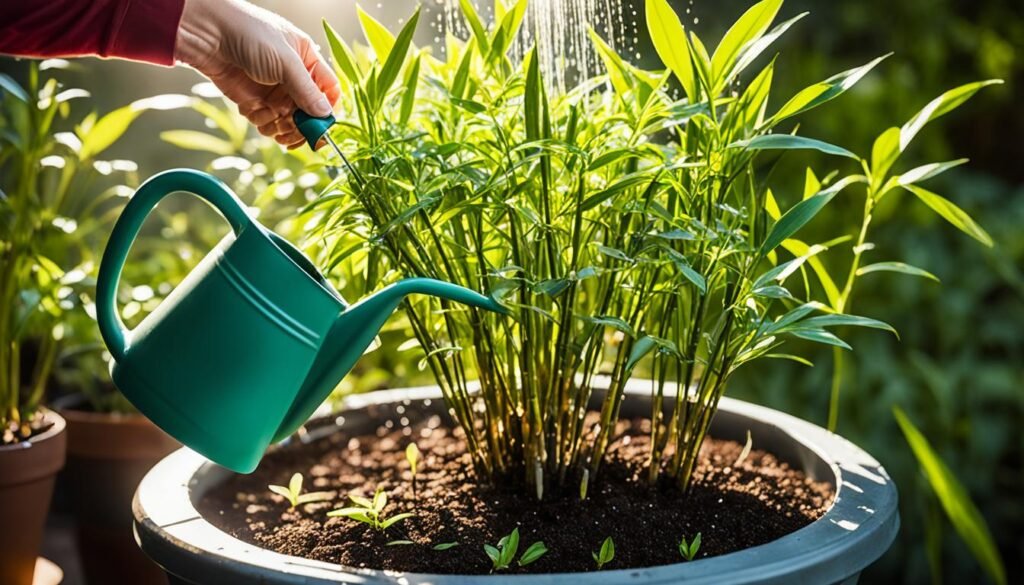
Adequate watering is essential for the health and hydration of your bamboo bonsai plants.
Fertilizing
When it comes to bamboo bonsai care, fertilizing plays a crucial role in promoting overall plant health. Instead of focusing on accelerating growth, our goal is to provide balanced nutrition to our bamboo bonsai plants. To achieve this, it is recommended to fertilize during the entire growth season, which ranges from early spring to late fall.
We suggest using a mild and balanced water-soluble fertilizer every few months. This will provide a steady supply of nutrients without overwhelming the plant. A slow-release fertilizer can also be beneficial as it releases nutrients gradually over time.
It is important to follow the instructions on the fertilizer packaging to ensure the correct dosage and application frequency. Remember, less is often more when it comes to fertilizing bamboo bonsai plants.
Benefits of Using Mild and Balanced Fertilizers
- Promotes overall plant health
- Avoids excessive and rapid growth, which can lead to weak or leggy plants
- Prevents nutrient imbalances that may cause foliage discoloration or other issues
Timing and Frequency of Fertilization
- Fertilize during the entire growth season, from early spring to late fall
- Apply a water-soluble fertilizer every few months or follow the instructions on the fertilizer packaging
- Consider using a slow-release fertilizer for gradual nutrient release
Remember, proper fertilization, combined with adequate watering, pruning, and other care practices, will contribute to the overall health and beauty of your bamboo bonsai plants.
Pruning
Pruning plays a vital role in the care of bamboo bonsai plants. By regularly pruning your bamboo bonsai, you can encourage dense and delicate growth, ensuring that it retains its desired shape and size. As bamboo bonsai plants tend to grow faster in warmer climates, more frequent pruning will be necessary to maintain their appearance.
When pruning your bamboo bonsai, it’s important to have a clear vision of the desired outcome. Remove any unwanted branches or stems that disrupt the overall aesthetics. Use sharp and clean pruning shears to make precise cuts, avoiding any jagged edges that could potentially harm the plant.
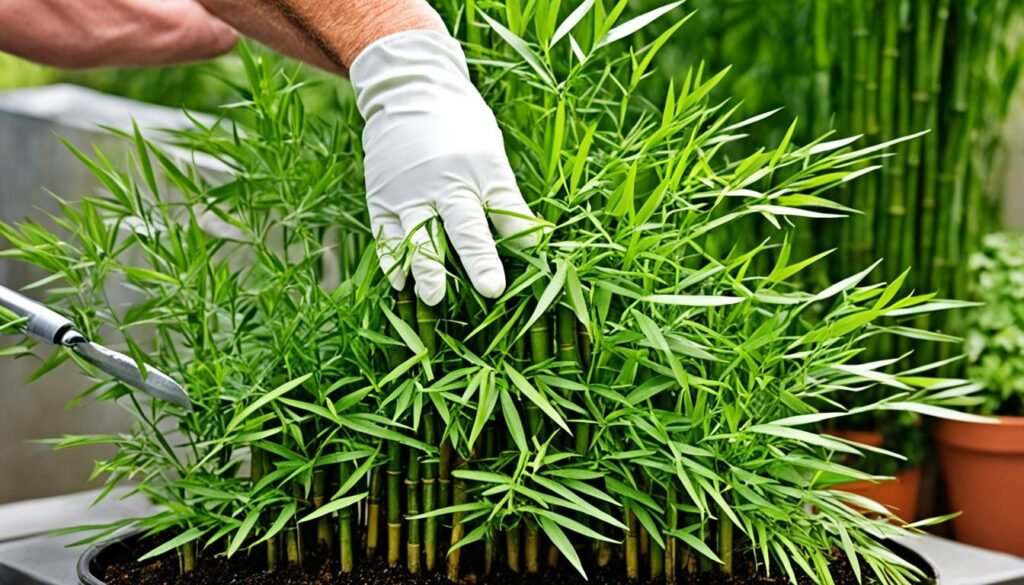
Start by removing any dead or damaged branches and leaves. This not only improves the appearance of the bonsai but also promotes new growth. Additionally, thin out overcrowded areas to allow for better air circulation and light penetration, ensuring the overall health of the plant.
To maintain the shape and size of your bamboo bonsai, selectively prune branches that contribute to its overall form. Pay attention to any branches that are competing for dominance or crossing over each other, as they can cause damage or hinder the plant’s growth.
Remember to step back periodically and evaluate the overall shape and balance of your bamboo bonsai. Regular pruning sessions will be necessary as your bonsai continues to grow. Keep in mind that each pruning session will provide an opportunity to refine and enhance the appearance of your bonsai.
Pruning Tips:
- Regularly prune your bamboo bonsai to maintain a dense and delicate growth.
- Remove dead or damaged branches and leaves to promote new growth.
- Thin out overcrowded areas to improve air circulation and light penetration.
- Prune branches that disrupt the overall shape and size of your bamboo bonsai.
- Step back and evaluate the form and balance of your bonsai as you prune.
Repotting
Repotting is an essential task in bamboo bonsai care, as these plants have fast-growing roots. It is recommended to repot bamboo bonsai plants annually to ensure their continued health and growth.
In the spring, when the plants are actively growing, it is the best time to check the root system and determine if repotting is necessary. By carefully examining the roots, we can assess their health and see if they have become pot-bound or are outgrowing the current container.
If repotting is required, it is important to choose the right soil mixture that promotes proper drainage and aeration. Well-draining soil mixtures such as Akadama, Pumice, and Lava rock are ideal for repotting bamboo bonsai. These materials allow excess water to escape, preventing waterlogged roots and potential rot.
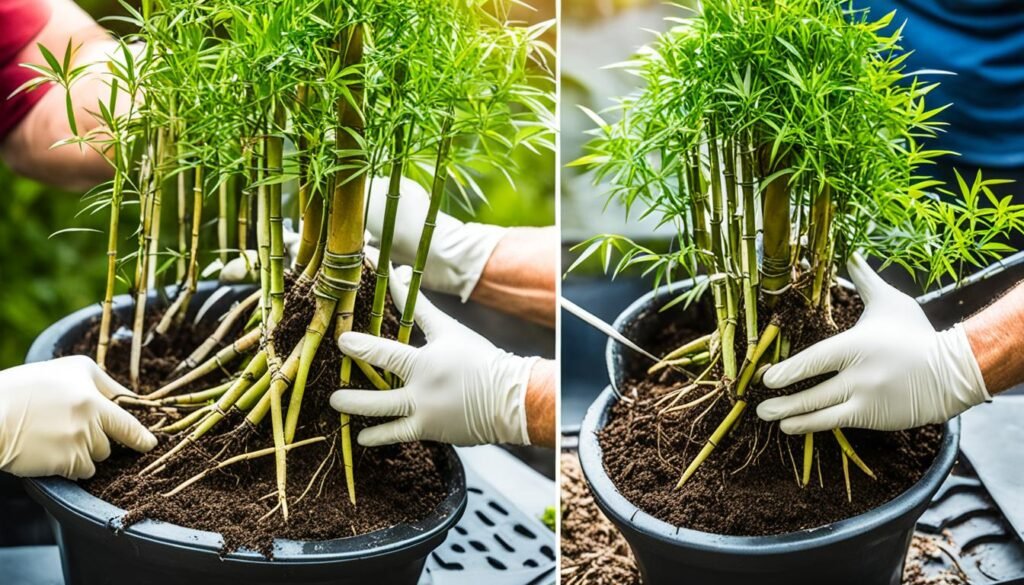
When repotting, gently remove the plant from its current container and prune any overly long or damaged roots. Place the plant into a slightly larger pot, ensuring that the roots have enough space to grow freely. Fill the container with the chosen soil mixture, carefully positioning the roots and gently firming the soil around them.
After repotting, water the plant thoroughly to help settle the soil and provide moisture to the roots. Place the repotted bamboo bonsai in a shaded area for a few weeks to allow it to recover from the process.
Remember, regular repotting helps maintain the health and vigor of your bamboo bonsai. By providing the necessary space and fresh nutrient-rich soil, you are ensuring its continued growth and beauty.
Essential Steps for Repotting Bamboo Bonsai:
- Assess the root system in the spring
- Choose a well-draining soil mixture
- Carefully remove the plant from its current container
- Prune any overly long or damaged roots
- Replant the bamboo bonsai in a slightly larger pot
- Fill the container with the chosen soil mixture
- Water thoroughly and place in a shaded area for recovery
Propagation
Propagating bamboo bonsai plants is a rewarding and straightforward process that allows you to expand your collection and share the beauty of these miniature trees.
1. Propagation from Cuttings:
If you already have a healthy bamboo bonsai plant, you can easily create new plants by taking cuttings. Here’s how:
- Select a healthy branch of the bamboo plant that is approximately 6-8 inches long.
- Make a clean cut just below a leaf node, ensuring there are at least two nodes on the cutting.
- Remove the lower leaves, leaving only a few at the top for photosynthesis.
- Dip the cut end in rooting hormone to encourage root development.
- Plant the cutting in a well-draining soil mixture, ensuring the leaf nodes are below the soil surface.
- Keep the soil consistently moist and place the cutting in a warm and bright location, but out of direct sunlight.
- Roots should develop within a few weeks, at which point you can acclimate the new plant to a sunnier location.
2. Purchasing Young Bamboo Plants:
If you don’t already have an established bamboo bonsai plant or prefer to start with a young plant, you can purchase suitable bamboo species from local nurseries. It is recommended to acquire dwarf varieties that are better suited for bonsai cultivation. These young plants can be transplanted into bonsai pots, enabling you to shape and train them according to your artistic vision.
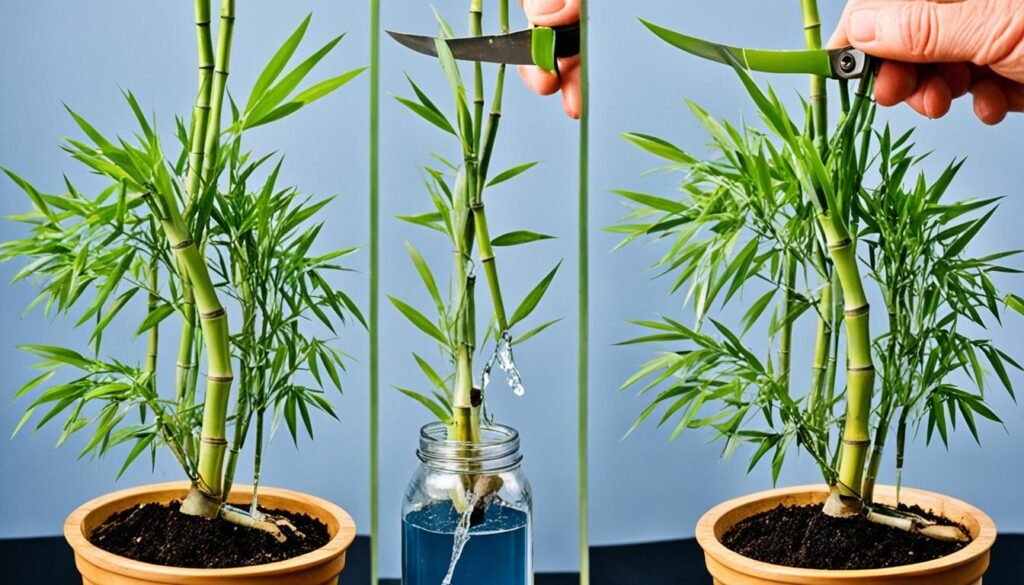
By propagating bamboo bonsai plants from cuttings or purchasing young plants, you can grow your collection and nurture these stunning miniature trees. Experiment with different varieties and techniques to create unique and captivating displays.
Pests and Diseases
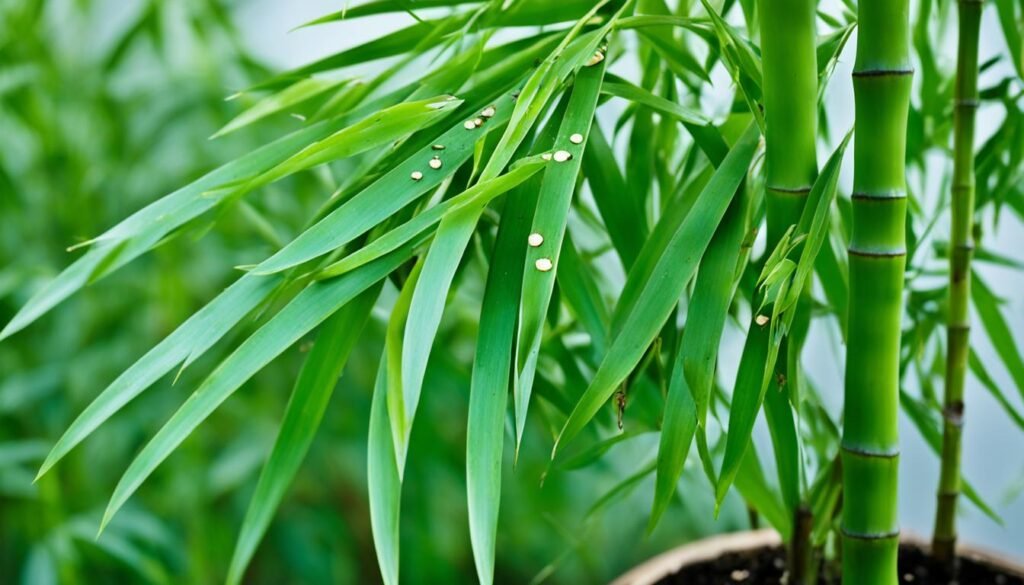
When it comes to bamboo bonsai plants, you’ll be happy to know that they are generally resilient and not highly prone to pests and diseases. With proper care, you can prevent most problems and ensure the health and vitality of your bonsai.
One of the key factors in keeping pests and diseases at bay is maintaining the right balance of lighting and watering. Providing your bonsai with adequate sunlight and moisture can help create an environment that is less conducive to pests and diseases.
Regular monitoring is crucial to catch any issues early on. Keep an eye out for common pests such as spider mites, aphids, and scale insects. These can be controlled through methods like spraying with insecticidal soap or using beneficial insects like ladybugs. If you notice any signs of damage or infestation, taking prompt action is important to prevent further spread.
Additionally, practicing good hygiene by keeping your bonsai clean and free from debris can also help prevent pest and disease problems. Remove any fallen leaves or dead plant material that may serve as a breeding ground for pests or fungi.
Remember, prevention is key in dealing with pests and diseases in bamboo bonsai plants. By providing the right conditions and staying vigilant, you can enjoy a healthy and beautiful bonsai without major concerns.
General Information
Welcome to the world of bamboo bonsai! Bamboo is a diverse group of evergreen plants with hollow and strong stems. When it comes to selecting bamboo for bonsai purposes, it’s best to choose dwarf cultivars and “clumping” bamboo species. These varieties are more suitable for the art of bonsai, allowing for easier shaping and maintenance.
To identify the specific variety of your bamboo bonsai, a bonsai tree identification guide can be a helpful resource. These guides provide detailed information about different types of bamboo bonsai, including their growth habits, leaf structure, and other distinguishing features.
Now that we have a better understanding of bamboo bonsai’s general information, let’s dive into the basics of bamboo bonsai care. By mastering the fundamentals, you’ll be well-equipped to nurture and enjoy your bamboo bonsai to its fullest potential.
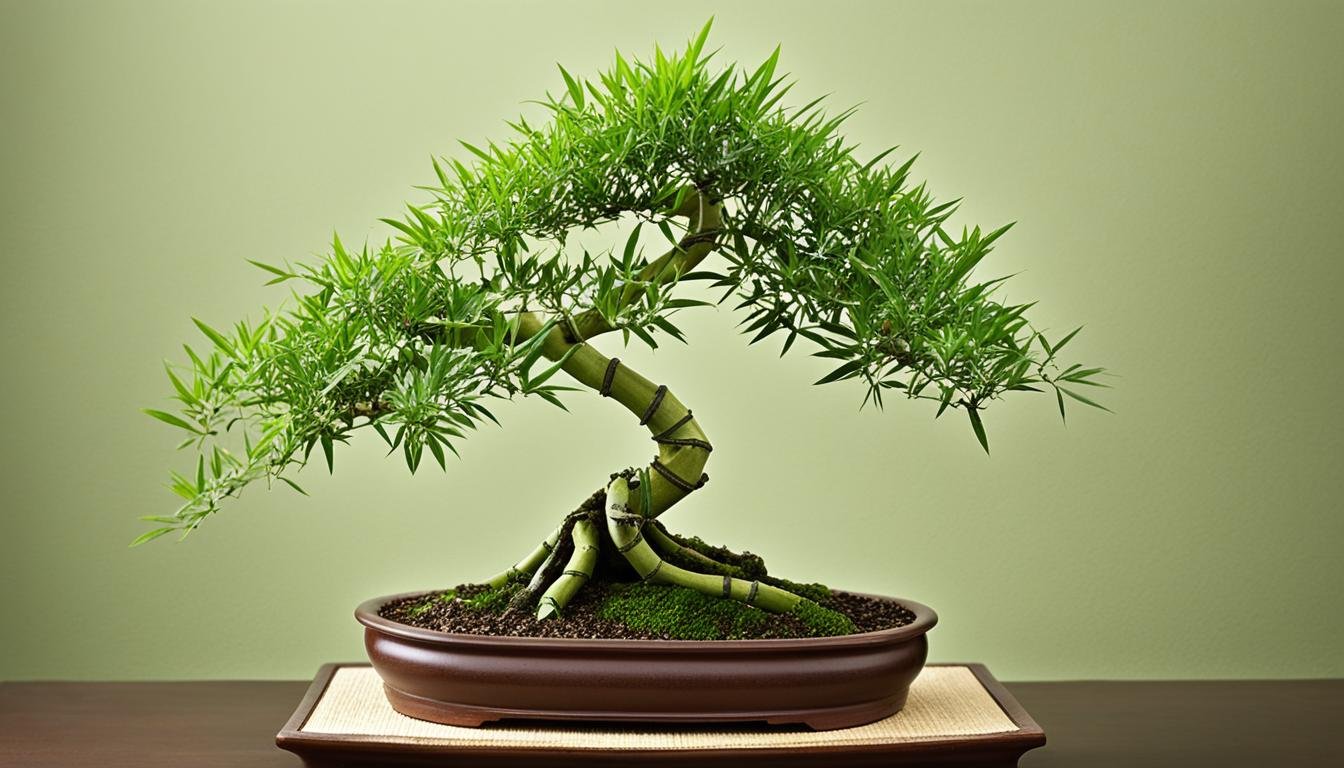
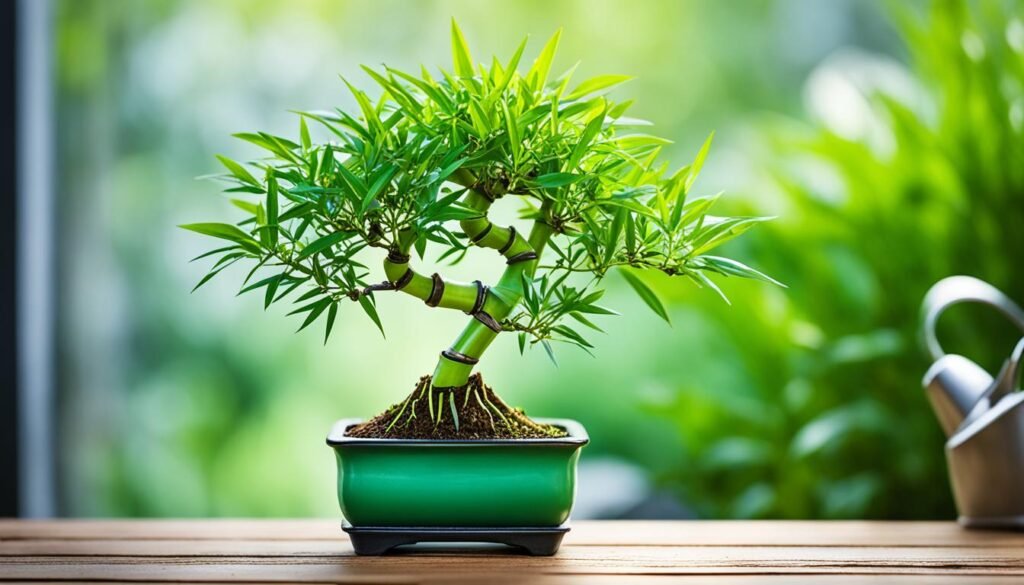
But before we delve into the care techniques, let’s take a moment to appreciate the beauty of bamboo bonsai in action. Take a look at the gorgeous specimen below:
Lucky Bamboo Care
When it comes to lucky bamboo care, there are a few important things to keep in mind. Lucky bamboo, scientifically known as Dracaena braunii, is not a true bamboo but is often referred to as one. Taking care of lucky bamboo is relatively easy, and with a little attention, you can enjoy its vibrant green beauty for years to come.
One of the key factors in lucky bamboo care is providing ample but indirect sunlight. Placing your lucky bamboo in a spot where it receives bright, filtered light will ensure its growth and overall health. Direct sunlight can scorch the leaves, so it’s best to avoid placing it in direct sunlight.
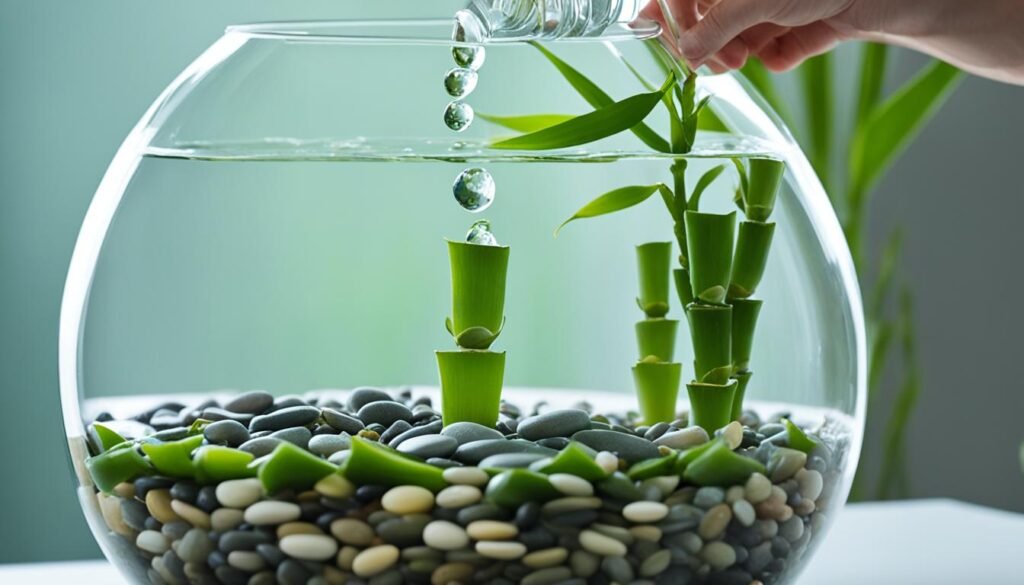
Another crucial aspect of lucky bamboo care is deciding whether to grow it in water or soil. Lucky bamboo can thrive in either medium, but it’s important to remember that the water needs to be changed regularly to prevent stagnation. If you choose to grow it in soil, make sure to use well-draining potting mix.
Fertilizing lucky bamboo should be done sparingly. Lucky bamboo does not require frequent fertilization but can benefit from a diluted liquid fertilizer once every two to three months during the growing season. Remember to follow the instructions on the fertilizer package and avoid overfertilizing, as it can harm the plant.
Propagation of lucky bamboo is typically done through cuttings. Simply cut a healthy section of the stem with a clean, sharp knife or pair of scissors, making sure each cutting has at least two nodes. Place the cutting in either water or soil, and it will develop roots within a few weeks.
In order to keep your lucky bamboo looking its best, it’s essential to remove any dead or yellow leaves. This not only enhances the overall appearance of the plant but also helps maintain its health. Regularly inspect the plant and snip off any dead or yellow leaves using clean, sterilized pruning shears.
Lastly, maintaining moderate temperatures is crucial for lucky bamboo care. Lucky bamboo plants prefer temperatures between 65°F and 90°F (18°C to 32°C). Avoid exposing them to extreme cold or hot temperatures, as it can cause damage to the plant.
Follow these lucky bamboo care tips, and you’ll have a beautiful and thriving plant that brings a touch of nature and positivity to any space.
Understanding Lucky Bamboo
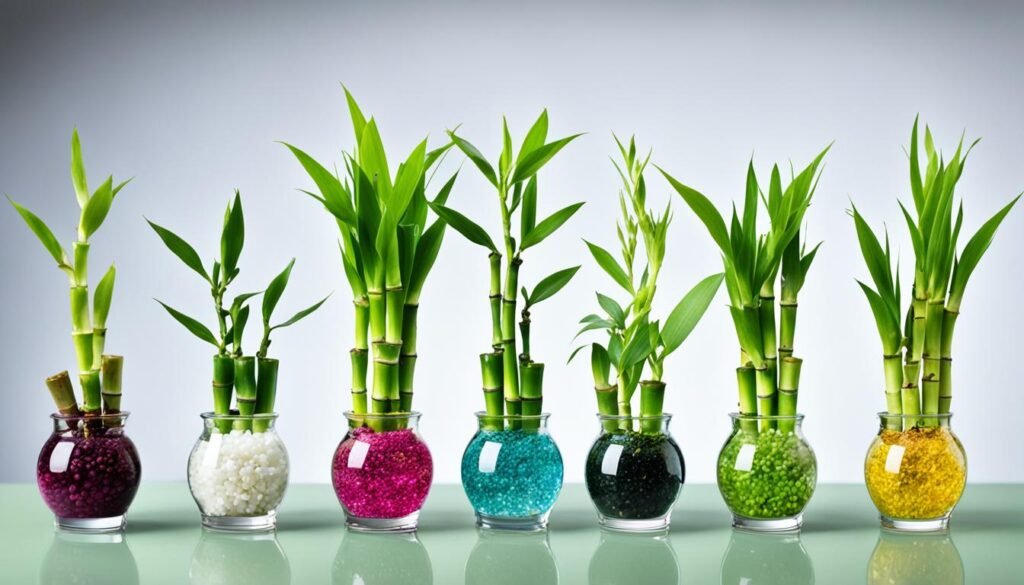
Lucky bamboo is more than just a beautiful houseplant. It holds symbolic significance in various cultures and is believed to bring positive energy, prosperity, and happiness into our lives. By understanding the meanings associated with lucky bamboo, we can appreciate its decorative charm and incorporate it into our homes with intention.
The Symbolism of Lucky Bamboo
Lucky bamboo is often associated with the principles of feng shui, a Chinese practice focused on the flow of positive energy within a space. The plant’s straight and upright growth symbolizes resilience and strength, while its twisted and curved stems represent flexibility and adaptability in the face of challenges.
In addition to these general meanings, lucky bamboo’s symbolism can be further enhanced by the number of stalks it possesses. Each number is believed to bring different types of luck:
- One stalk represents simplicity and a fresh start.
- Two stalks symbolize love and double happiness.
- Three stalks signify happiness, wealth, and longevity.
- Five stalks represent the five essential elements: fire, earth, metal, water, and wood.
- Six stalks are associated with harmony and balance in all areas of life.
- Seven stalks symbolize good health and well-being.
- Eight stalks are believed to bring wealth and abundance.
- Nine stalks represent great luck and good fortune.
- Ten or more stalks symbolize a brighter future and immense blessings.
Choosing the number of stalks for your lucky bamboo can add a personal touch and align with your specific intentions and aspirations.
Caring for Lucky Bamboo
To fully enjoy the symbolic and decorative benefits of lucky bamboo, it is crucial to provide proper care based on its preferences:
- Light: Lucky bamboo thrives in indirect sunlight. Place it near a window with filtered light or in a well-lit room, but avoid exposing it to direct sunlight, as it can cause leaf burn.
- Water: Keep the roots of lucky bamboo submerged in water at all times. Change the water every two to four weeks to maintain freshness. If you prefer to grow it in soil, ensure the soil is consistently moist but not waterlogged.
- Fertilization: Lucky bamboo does not require intense fertilization. Use a diluted liquid houseplant fertilizer once every two to three months during the growing season. However, too much fertilizer can lead to brown tips and other issues.
- Temperature: Lucky bamboo prefers temperatures between 65-90°F (18-32°C). Avoid exposing it to extreme cold or hot temperatures.
- Pruning: Trim any yellow or dead leaves from the stems of lucky bamboo using clean and sharp scissors. This helps promote healthy growth and maintains the plant’s aesthetic appeal.
By providing the right environment and care, lucky bamboo can continue to bring positive energy and beauty into your home for years to come.
Conclusion
We have reached the end of our comprehensive bamboo bonsai plant care guide, and we hope it has provided you with all the necessary information to ensure the health and success of your bamboo bonsai and lucky bamboo plants. By paying close attention to the placement, watering, fertilizing, pruning, and repotting needs of these plants, you can create a thriving and visually stunning bonsai display that brings beauty and positivity to any space.
Remember, proper placement in an outdoor area with sufficient sunlight is essential for the growth and development of bamboo bonsai. Regular watering, keeping the soil moist but not waterlogged, will ensure that your plants thrive. Utilizing mild and balanced fertilizers during the growth season will promote overall plant health. Regular pruning will help maintain the desired shape and size of your bonsai, while annual repotting in well-draining soil mixtures will support healthy root growth.
With these care instructions in mind, you can cultivate bamboo bonsai plants and lucky bamboo that not only enhance the aesthetic appeal of your environment but also symbolize prosperity and positive energy flow. So, roll up your sleeves, get your gardening tools, and embark on a fulfilling journey of growing and caring for these captivating plants. Happy bonsai gardening!